Quick answer: Choose Bloom Sparkling Energy if you want slightly less caffeine, natural caffeine sourced from green coffee bean extract, and a formula that highlights L-theanine, ginseng, and prebiotic fiber. Choose CELSIUS Original or Vibe if you want a familiar 200-mg caffeine serving and a formula built around green tea extract, guarana, ginger, taurine, and seven essential vitamins.
This comparison is about Bloom Sparkling Energy, not Bloom Greens & Superfoods. They are different products: Bloom Sparkling Energy is a ready-to-drink caffeinated beverage, while Bloom Greens is a powdered dietary supplement.
Bloom vs. CELSIUS at a glance
| Feature | Bloom Sparkling Energy | CELSIUS Original / Vibe |
|---|---|---|
| Typical serving | 12 fl oz can | Can size and flavor vary; standard Original/Vibe cans contain 200 mg caffeine |
| Caffeine | 180 mg in a standard can; Bloom says its 7.5 fl oz cans contain 100 mg | 200 mg per can |
| Sugar | 0 g | 0 g |
| Calories | 10 calories per can | Check the specific can; product labels and flavors can vary |
| Caffeine source | Green coffee bean extract | Includes caffeine and caffeine-containing guarana extract |
| Other highlighted ingredients | L-theanine, ginseng, prebiotic fiber, B vitamins | Green tea extract, guarana, ginger, taurine, chromium, and seven essential vitamins |
| Best fit | A slightly lower-caffeine, calmer-feeling energy option | A stronger, straightforward energy lift for people who already tolerate 200 mg |
Bloom’s current product page lists 180 mg of natural caffeine for its regular cans, 100 mg for its 7.5 fl oz cans, zero sugar, and 10 calories per can. CELSIUS states that its Original and Vibe beverages contain 200 mg of caffeine per can; its Essentials line is higher at 270 mg, so it should not be treated as interchangeable with standard CELSIUS. [1][2]
Product images
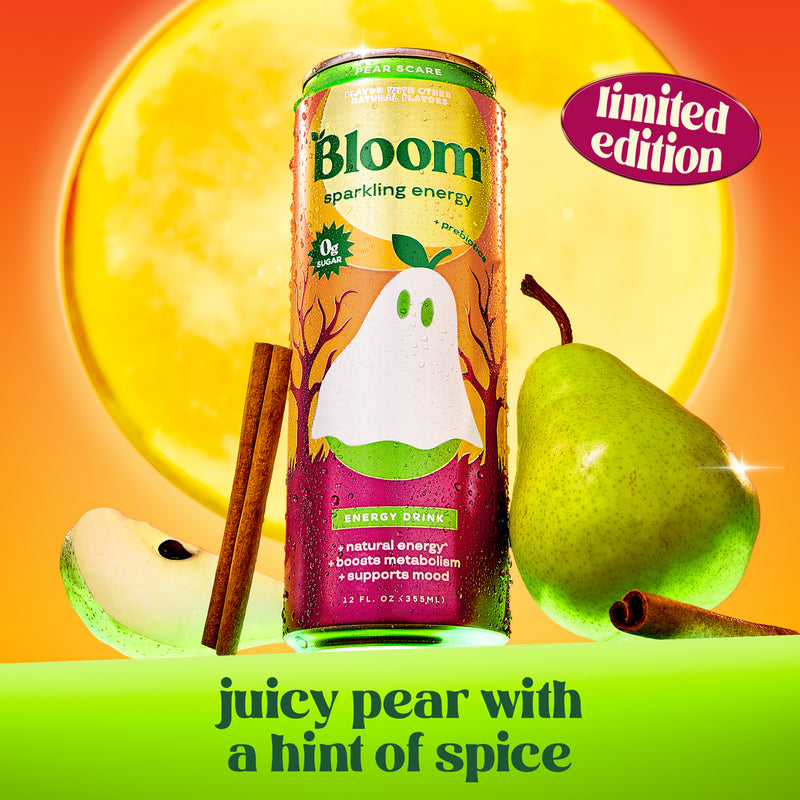
Image credit: Bloom Nutrition product photography, sourced from the official Bloom Sparkling Energy product page. Bloom retains the rights to this image; confirm usage permission before republishing commercially.

Image credit: “Celsius Live Fit Can,” by Hstoops, via Wikimedia Commons, licensed under CC BY 4.0. No changes made.
Caffeine: Bloom is lower, but neither is low-caffeine
The clearest difference is the dose. A regular Bloom Sparkling Energy can has 180 mg of caffeine, while standard CELSIUS Original and Vibe cans have 200 mg. That is only a 20-mg difference—about 10%—so most people will notice the difference less than they would notice the difference between either drink and a lightly caffeinated soda or tea.
The more important question is your total caffeine intake. Coffee, tea, pre-workout, chocolate, and medication can all add to the same daily total. The U.S. Food and Drug Administration says that up to 400 mg of caffeine per day is an amount not generally associated with negative effects for most healthy adults, while also emphasizing that sensitivity varies by person. Two standard CELSIUS cans or two regular Bloom cans would put you near or below that general figure before counting any other caffeine. [3]
That does not make two cans a universal recommendation. People who are caffeine-sensitive may feel effects from one can, including jitteriness, a fast heartbeat, anxiety, stomach discomfort, or sleep disruption. Caffeine also has a long enough half-life that a late-afternoon can can affect bedtime even if the initial energy boost has faded.
Caffeine winner: Bloom by a narrow margin, because 180 mg is slightly easier to fit into a moderate-caffeine routine. This is not a dramatic difference.
Ingredients: a different kind of “functional” formula
Bloom positions its drink around natural caffeine from green coffee bean extract, plus L-theanine and ginseng. Its product page also highlights prebiotic fiber and B vitamins. That combination is designed to appeal to people who want energy with a wellness-oriented ingredient story.
CELSIUS uses a more performance-oriented blend. Its official materials describe green tea extract, guarana seed extract, ginger root extract, taurine, chromium, and seven essential vitamins. The company also describes CELSIUS as a zero-sugar functional beverage for active lifestyles—not as a powdered pre-workout supplement. [2][4]
The labels overlap in a few broad ways: both use plant-derived caffeine sources or ingredients associated with them, both avoid sugar, and both market themselves beyond plain stimulation. But “natural caffeine” does not mean caffeine-free, gentle, or automatically safer. Caffeine from green coffee bean extract and caffeine from guarana still contribute to your total caffeine dose.
There is also a difference between a company highlighting an ingredient and an ingredient guaranteeing an outcome. L-theanine may be attractive to shoppers who prefer a smoother-feeling formula, but your experience depends on the complete formulation, your tolerance, your sleep, and whether you are already consuming caffeine. Likewise, a can containing vitamins does not replace a balanced diet.
Ingredient winner: It depends on your priority. Bloom has the more wellness-forward formula; CELSIUS has the more recognizable sports-energy positioning.
Sugar and calories: essentially a tie
Both brands promote zero-sugar energy drinks. Bloom lists 10 calories per can, while CELSIUS describes its core energy drinks as zero sugar and low calorie. Exact calories, serving sizes, sweeteners, and ingredients can vary by flavor and product line, so the can in your hand should be the final authority.
Zero sugar can be useful if you are trying to reduce added sugar or avoid a heavy drink before exercise. It does not automatically make a beverage healthy, though. A zero-sugar energy drink can still deliver a large stimulant dose, and sweeteners may not agree with everyone.
Sugar and calorie winner: Tie. Choose based on caffeine, flavor, price, and tolerance rather than assuming one is nutritionally free of trade-offs.
Taste and drinking experience
Taste is subjective, but the brands have distinct personalities:
- Bloom leans into bright, fruit-forward flavors and a lifestyle-wellness identity. It is a good fit if you dislike the sharper, more traditional energy-drink profile.
- CELSIUS offers a broad range of sparkling and non-carbonated flavors, including familiar citrus and fruit combinations. Its taste often reads as lighter and more functional than a sugary energy drink because it has no sugar.
Carbonation matters too. If bubbles bother your stomach, look for Bloom’s smaller cans or a non-carbonated CELSIUS option rather than assuming every flavor will feel the same. If you are drinking before training, a smaller serving may also be more comfortable than quickly finishing a full can.
Taste winner: Bloom for a softer, wellness-style flavor profile; CELSIUS for variety and a more established energy-drink range.
Which is better before a workout?
Neither brand should be treated as a substitute for water, food, sleep, or a properly designed training plan. If you already tolerate caffeine, either drink may be convenient before exercise. The better choice depends on dose and timing:
- Pick Bloom when you want 180 mg rather than 200 mg, especially if you are trying to keep room for coffee later.
- Pick CELSIUS when you already know that 200 mg works for you and you want the brand’s established active-lifestyle positioning.
- Avoid adding either drink to a separate high-caffeine pre-workout without calculating the combined dose.
- Avoid drinking a can close to bedtime; the “right” cutoff varies with metabolism and sensitivity.
CELSIUS itself advises checking the label for the specific product because caffeine and serving sizes vary. Its current guidance also distinguishes standard CELSIUS from the higher-caffeine Essentials line. [2]
Which is better for everyday energy?
For daily use, the best option is the one that does not push your caffeine intake higher than you realize. Bloom has a small numerical advantage at 180 mg, but it is still a substantial dose. CELSIUS may be the better fit for someone who wants a consistent 200-mg serving and already knows how they respond.
If your energy problem is happening every day, the more useful solution may be diagnosing the cause: too little sleep, irregular meals, dehydration, stress, or an overly aggressive training schedule. An energy drink can make you feel more alert temporarily; it does not solve the underlying reason you are tired.
Bloom vs. CELSIUS: final verdict
Bloom Sparkling Energy is the better pick for most people who want a slightly lower-caffeine drink with a wellness-oriented ingredient profile. Its 180 mg caffeine serving, zero sugar, 10 calories, and focus on green coffee bean extract, L-theanine, ginseng, and prebiotic fiber make it the more approachable option on paper.
CELSIUS is the better pick if you want a full 200-mg caffeine serving and a formula associated with active lifestyles. Its green tea extract, guarana, ginger, taurine, and vitamin blend give it a different identity, but the higher caffeine dose makes label-reading and timing more important.
The practical answer is simple: start with one can, do not stack it casually with other stimulants, track how it affects your sleep and heart rate, and choose the flavor you will actually enjoy. “Better” is less about the logo and more about the dose that fits your body and routine.
Health note: This article is for general information, not medical advice. People who are pregnant or nursing, under 18, sensitive to caffeine, or managing a health condition or medication should ask a qualified health professional before using caffeinated energy drinks.
Sources
- Bloom Nutrition — Sparkling Energy: product claims, caffeine amount, serving-size note, zero sugar, and calories.
- CELSIUS — Essential Facts: caffeine by product line and responsible-use guidance.
- U.S. Food and Drug Administration — Spilling the Beans: How Much Caffeine Is Too Much?: general caffeine guidance for most healthy adults.
- CELSIUS — Before the Gym: CELSIUS Energy Drinks and Pre-Workout Energy: product category, zero-sugar positioning, and highlighted ingredients.
- Wikimedia Commons — Celsius Live Fit Can: image author and CC BY 4.0 license.
